
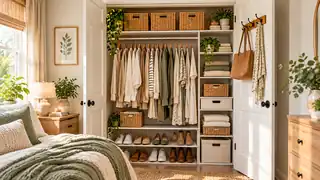
Closet organization is less about buying matching bins and more about making the space work for the way you actually get dressed. A closet can have generous shelves and still feel chaotic when everyday clothes are buried, hangers take up too much room, or accessories have no clear home. A tiny closet can feel surprisingly practical when each zone has a purpose and the things you use most are easy to reach.
This guide walks through a realistic, step-by-step system for organizing closets of different sizes, from a narrow apartment reach-in to a larger walk-in. You will learn what to do before buying organizers, how to make use of vertical space, where shoes and accessories belong, and how to keep the system working after the first tidy afternoon.
The quick closet organization plan
- Edit first: remove items that no longer fit, belong elsewhere, or need repair.
- Measure next: record the usable width, depth, height, rod length, shelf spacing, and door clearance.
- Assign zones: give hanging clothes, folded items, shoes, accessories, and seasonal storage their own places.
- Use the space upward: consider a second rod, shelf dividers, door hooks, or stackable bins before adding floor furniture.
- Buy only to solve a measured problem: every basket, drawer, or rack should fit and make an item easier to access.
- Make maintenance simple: return items to the same home and do a short weekly reset.
If you are organizing a bedroom at the same time, our guide to small bedroom storage ideas covers other places to keep belongings without crowding the room.
1. Start with a closet edit, not a shopping trip
The fastest way to make a closet feel larger is to stop asking it to store things you do not use. Before ordering hangers or containers, take out the contents one section at a time. If emptying the entire closet would overwhelm you, start with one rod or shelf and finish that area before moving on.
Sort items into practical groups: keep and wear now, keep but use seasonally, repair or alter, donate or sell, and recycle or discard when appropriate. Put items that belong in another room into a separate basket so they do not drift back into the closet. Be honest about duplicates, uncomfortable clothes, and things that no longer fit your current life.
Use a decision rule that feels realistic
Ask yourself whether the item fits, is comfortable, suits your current routine, and would be chosen over similar pieces. Sentimental clothing deserves a different decision from an everyday T-shirt, so allow a small keepsake box if that helps. Avoid turning decluttering into a test of willpower: the goal is a usable closet, not a perfectly minimal wardrobe.
For uncertain items, create a dated “maybe” box and store it somewhere accessible but separate from daily clothes. If you do not retrieve anything from it over a period that makes sense for your seasons and lifestyle, review the contents again. Do not put away clothing that needs repair without noting the repair you intend to make.
2. Measure before choosing organizers
Storage products are only useful when they fit the real space. Measure the inside width and depth of shelves, the height between shelves, the length of each hanging rod, and the clear floor area. Check how far the door swings and whether a drawer or basket can be pulled out without hitting the door, bed, or nearby furniture.
Write the measurements down in one note and take a few photos. Include obstacles such as a sloping ceiling, baseboard, light fixture, angled wall, or low hanging rail. If you rent, also note which changes are allowed by your lease and which would require drilling or permanent hardware.
Plan around access, not just capacity
A container that fits perfectly but requires moving three other containers to reach it is not a good everyday solution. Keep frequently used items in the easiest-to-reach zone, less-used items higher or farther back, and heavy items low. Leave enough room to slide hangers, remove folded clothes, and lift bins safely.
3. Create zones for the way you get dressed
Closets become easier to maintain when each category has a consistent home. Common zones include everyday hanging clothes, work or occasion outfits, folded knitwear, shoes, bags, accessories, laundry, and seasonal items. The exact zones should reflect your routine rather than a picture-perfect arrangement.
Keep workwear together if you get dressed for work in a hurry. Put gym clothing near the place you change, and keep frequently used bags at a reachable height. If several people share a closet, divide space by person or by clearly marked sections so items do not migrate.
Give prime space to the most-used items
The middle, easy-to-reach area is valuable real estate. Use it for the clothing and accessories you reach for most often. Special-occasion pieces, travel bags, spare bedding, and out-of-season items can live on higher shelves or in another suitable storage area, provided those items remain easy enough to retrieve when needed.
4. Standardize hangers to save visual and physical space
A mix of thick wooden hangers, bulky plastic hangers, wire hangers, and specialty hangers can make a rod feel crowded and uneven. A consistent slim hanger can reduce wasted width and make clothing easier to scan. Non-slip styles are useful for silky tops or wide necklines, while sturdy hangers are better for coats and structured jackets.
You do not need to replace every hanger at once. Start with the most crowded section and compare the actual space gained. Keep suitable padded or shaped hangers for garments that need them, and avoid putting heavy coats on flimsy hangers that bend.
Choose hangers that suit the clothing rather than forcing every item onto the same style. Delicate knitwear is often better folded because hanging can stretch the shoulders. Button jackets appropriately, close zippers where useful, and leave enough space to slide garments along the rod without dragging them.
5. Add a second hanging level where it makes sense
Many closets have unused vertical space beneath shorter garments. A second rod can create separate levels for shirts, skirts, trousers folded over hangers, or children’s clothing. It is less useful for long dresses, coats, and garments that need full hanging length, so check what you own before installing one.
Measure the longest hanging items and the clearance needed to remove clothes comfortably. A lower rod should not force garments onto the floor or block drawers. Use a properly rated closet system or tension-mounted solution suitable for the span and load. Do not assume a tension rod is safe for heavy clothing unless its manufacturer specifies an appropriate capacity.
If you rent or cannot drill, a freestanding garment rack may be more appropriate. Keep it stable, avoid overloading it, and position it so it does not narrow a walkway or create a tipping hazard.
6. Make shelves easier to use with dividers and containers
Open shelves often become unstable stacks because soft clothing has no boundaries. Shelf dividers can separate jeans from sweaters, while small bins can contain accessories and loose items. Choose the lightest solution that solves the problem. If a shelf already works well, do not add a divider just because it looks organized in a photo.
Fold clothing into consistent shapes and store it in short stacks that are easy to remove without disturbing everything else. File-folding T-shirts can make labels and colors visible, but a conventional stack is fine if it works for you. Avoid filling shelves so tightly that a single item cannot be pulled out.
Use open or clear containers for frequently used items
Open baskets and clear bins make contents visible, which is helpful for everyday accessories. Opaque bins can look calmer on high shelves or for seasonal storage, but label them clearly. Use containers that fit the shelf depth; a bin that sticks out can snag clothing or prevent closet doors from closing.
Do not stack more containers than you can safely reach. Heavy items belong lower down, and high shelves should hold lightweight belongings you do not need every day. If you use a step stool, keep it stable and store it where it will not block the closet.
7. Use the full height of the closet
Closet space is often wasted above the main shelf and below hanging garments. A second shelf, a hanging organizer, or a row of labeled bins can use that height without taking up more floor area. Before adding anything, confirm that the shelf or organizer will not interfere with the door, clothing, lighting, or ventilation.
Store seasonal accessories, spare linens, travel items, or rarely used bags higher up. Use a sturdy container with a handle if you need to bring it down. Avoid storing heavy boxes overhead, and do not place unstable stacks above the height at which you can reach safely.
Vertical storage works best when each level has a clear purpose. If every shelf becomes a random holding area, you have simply moved the clutter upward. Labels, category boundaries, and a little empty space make the system much easier to maintain.
8. Make the back of the door work harder
The inside of a closet door can hold lightweight accessories that would otherwise occupy a shelf. Over-the-door hooks can hold belts, scarves, hats, robes, or a frequently used bag. Pocket organizers can work for smaller accessories or shoes if the door closes properly and the added weight is within the product’s limits.
Measure the door thickness and clearance before buying a rack. Some doors cannot close with bulky hooks, and a loaded organizer can bang against the door or wall. Use soft bumpers where appropriate and keep sharp or heavy objects away from the top edge.
For renters, removable hooks may offer a lower-impact option, but follow the weight rating and surface instructions. Adhesive products are not suitable for every paint finish, wallpaper, or humidity level. Test discreetly when appropriate and avoid hanging anything valuable or breakable from an uncertain mount.
9. Organize shoes around frequency and shape
Shoes can consume a surprising amount of floor space when pairs are mixed with bags and laundry. Keep everyday shoes at the easiest-to-reach level, and move formal or seasonal pairs to a separate shelf or labeled box. A low shoe rack, stackable clear boxes, or slanted shelves may work, depending on the closet’s depth and your footwear.
Measure the longest shoes before buying storage. Tall boots need different space from flats, and bulky trainers may not fit narrow compartments. If you use boxes, label the front or choose transparent fronts so you can find a pair without opening every container.
Let damp or muddy shoes dry before storing them in closed containers. Keep shoe storage clean and avoid packing footwear so tightly that it bends or damages the material. If the closet floor is narrow, consider a small rack near the entry instead of forcing every pair inside.
10. Give accessories a dedicated home
Belts, scarves, hats, jewelry, sunglasses, and small bags often create the most irritating kind of clutter: small objects that disappear into larger piles. Assign each type a compact home. Hooks work for belts and frequently used bags, shallow trays can corral jewelry, and divided drawers help keep smaller pieces visible.
Use a hanging organizer for scarves or a drawer divider for socks and accessories. If you have delicate jewelry, store it in a way that reduces tangling and protects it from moisture. Avoid placing small valuables in a high open basket where they can be knocked down or lost behind other items.
Keep only the accessories you reach for in the prime zone. Special-occasion pieces can live together in a labeled box, while daily items stay close to the clothes they complement. The best setup reduces the number of decisions you need to make when getting ready.
11. Store handbags without crushing them
Handbags hold their shape better when they are not stacked under heavy items. Stand structured bags upright on a shelf or place them in individual cubbies if space permits. Lightly stuff bags with clean tissue or another suitable soft filler when needed, and store dust bags only if you can still identify what is inside.
Smaller bags can nest inside larger ones if the materials and shapes allow it, but avoid stuffing delicate leather or embellished bags too tightly. Keep frequently used bags on hooks or an easy-to-reach shelf, and place occasional bags higher up. If hooks are used, make sure they support the weight without stretching handles.
12. Make drawers and hanging organizers work together
Drawers are useful for socks, underwear, workout gear, sleepwear, and other small items. Dividers can stop categories from mixing, but they do not need to fill every inch. A drawer that opens and closes smoothly is more useful than one packed with tiny compartments.
If your closet has no drawers, a compact set of drawers or a hanging fabric organizer may add the right kind of storage. Check the dimensions carefully and make sure the organizer does not block the clothes behind it. Keep heavier items in a stable freestanding unit rather than a fabric pocket designed for lightweight clothing.
Use a folding method that lets you see what you own. You can file-fold, roll, or stack based on the item and your preference. The right method is the one that makes it easy to return clothes after laundry day, not the one that requires constant re-folding.
13. Rotate seasonal clothing without losing track
Bulky winter coats, swimwear, and special seasonal accessories do not all need the same amount of prime closet space year-round. Store off-season pieces in clean, dry containers or another suitable location, and label them with both the category and season. Keep a few transitional items accessible if your weather changes quickly.
Before storing clothing, make sure it is clean and completely dry. Follow care labels, especially for wool, leather, down, and delicate fabrics. Use breathable storage where appropriate, avoid compressing items that can lose their shape, and do not seal damp clothing in plastic.
Put a reminder on your calendar to rotate items when the season changes. During the swap, review whether anything was not worn, needs repair, or should be donated. This small habit prevents storage boxes from becoming permanent hiding places.
14. Organize a small reach-in closet
A narrow reach-in closet benefits from a simple, high-visibility layout. Start by clearing the floor and deciding which items need hanging space. Use a second rod for shorter garments if appropriate, place folded items in shallow containers, and keep shoes in a low rack or neat row that does not block access.
Use the back of the door for lightweight accessories, and reserve the top shelf for seasonal or infrequently used belongings. If the closet is very shallow, avoid deep bins that make items at the back difficult to reach. A slim basket that slides out can be more practical than a large container that has to be lifted over everything else.
Do not try to create a mini walk-in closet inside a reach-in space. The goal is to make the most-used items easy to find and remove. If the closet is shared, divide the rod and shelf space clearly so each person knows where things belong.
15. Organize a walk-in closet without wasting its corners
A walk-in closet has more options, but extra space can encourage random storage. Treat it as a series of zones rather than one large room. Keep daily clothing together, use shelves for folded items, and place accessories in a visible drawer or organizer near the area where you get dressed.
Make sure the central walkway stays clear. Do not fill every wall with furniture if it leaves no room to turn, open drawers, or reach hanging garments. Use corners for items that fit comfortably, such as a compact shelf or a hamper, rather than forcing in a large unit that becomes difficult to access.
If you are considering a custom system, first live with a temporary arrangement for a few weeks. That will show which shelves you use, where you need hanging space, and what height feels comfortable. Then invest in permanent changes based on observed habits rather than guesses.
16. Choose renter-friendly organization options
Renters can often improve a closet without permanent alterations. Freestanding racks, portable drawer units, shelf dividers, baskets, tension-mounted organizers designed for the intended load, and over-the-door hooks can all be useful. The right choice depends on the closet’s construction, door clearance, and what the lease permits.
Be cautious with adhesive hooks and removable strips. Weight ratings assume the specified surface and installation method, and paint, wallpaper, humidity, and temperature can affect performance. Never rely on an untested adhesive mount for heavy or fragile items.
If you want to install shelves or a second rod, ask permission when required and use hardware suitable for the wall and expected load. Avoid damaging doors or trim with oversized hooks. When in doubt, a stable freestanding unit is safer than a poorly mounted organizer.
17. Build an organized closet on a budget
Start with a no-spend reset. Reuse shoe boxes, small baskets, or containers you already own, provided they are clean and safe for the items being stored. Move seldom-used items elsewhere, group similar clothing, and standardize the layout before deciding whether you need to buy anything.
If you do spend money, prioritize the problem that causes the most daily friction. For a crowded rod, slim hangers may help. For collapsing piles, shelf dividers could be enough. For accessories that vanish, a small drawer tray or hook rail may solve the issue more cheaply than a full closet system.
Compare the product’s dimensions, materials, load capacity, cleaning requirements, and return policy. Avoid buying a large set of matching containers before testing one. The best value is not the lowest price per bin; it is the solution you will actually use for a long time.
18. Improve visibility with lighting and labels
A dark closet makes it harder to see colors, find matching pieces, and return items to the correct shelf. If possible, improve the existing light or add a suitable battery-operated or plug-in closet light that is designed for the location. Follow the manufacturer’s installation and safety instructions, and keep lighting away from fabrics and stored items as directed.
Labels help when bins look alike or sit on a high shelf. Use broad labels such as “winter accessories,” “travel,” or “spare linens.” Overly detailed labels can become a maintenance chore, so use the fewest words needed to identify the category.
Transparent bins are useful for things you need to see quickly, while matching opaque containers can create a calmer look on open shelves. You can combine both: clear storage for frequently used accessories and labeled closed bins for seasonal items.
19. Give laundry and worn-once clothing a place
A closet can look disorganized even when the clothes themselves are sorted if laundry has nowhere to go. Use a hamper that fits the floor area and is easy to carry. If you separate colors or fabrics, choose a divided hamper only if you have enough room and will consistently use the compartments.
Many people also need a place for clothing that is not clean enough to return to the closet but not ready for the wash. A small hook or designated hanger can prevent these items from landing on a chair. Keep this category limited so it does not become a second wardrobe outside the system.
Choose a washable or wipeable hamper and avoid storing damp towels or sweaty clothing in a closed space for long periods. Let items dry as needed and maintain airflow. A practical laundry routine supports closet organization more than any decorative basket.
20. Create a five-minute maintenance routine
Even a well-organized closet will become untidy if putting things away takes too many steps. At the end of the day, return loose items to their zones, hang garments on the correct hanger, and move shoes back to their place. A short reset is easier than a full weekend reorganization.
Once a week, check the floor, fold any collapsed stacks, return accessories to their tray, and remove items that belong elsewhere. Once a month, review one small area rather than emptying the whole closet. When a new item enters, decide where it will live before removing the tags or putting it away.
Use a “one in, one out” rule only if it suits your budget, needs, and household. It can help limit overflow, but it is not a universal requirement. The broader principle is to notice when a category no longer fits and make a deliberate adjustment before the closet becomes frustrating again.
Common closet organization mistakes to avoid
- Buying before measuring: an organizer that is too deep or too tall can block access or prevent doors from closing.
- Keeping everything on hangers: heavy knits and some delicate pieces are better folded according to their care needs.
- Overfilling shelves: packed stacks are difficult to remove and quickly collapse.
- Using the top shelf for heavy items: high storage should be light enough to retrieve safely.
- Hiding everything in opaque bins: without clear labels, you may forget what you own.
- Creating too many categories: a system with excessive rules is hard to maintain during busy weeks.
- Ignoring the door swing: hanging organizers and drawers need clearance to function properly.
- Expecting a single reset to last forever: small maintenance habits keep the system usable.
Frequently asked questions about closet organization
What is the first step in closet organization?
Start by removing items you no longer wear or need, then measure the available space. Decluttering reveals the true amount and type of storage you need, while measuring prevents wasted purchases.
How do I organize a small closet with lots of clothes?
Prioritize the clothing you wear most, group categories, use slim hangers where appropriate, and make use of vertical space with a second rod or shelf organizers. Store seasonal items elsewhere if you have a suitable dry location, and keep the floor clear enough to access everything.
Are matching hangers worth it?
They can be helpful because slim hangers may use less rod width and create a consistent visual line. They are not essential, however, and the correct hanger depends on the garment. Use sturdy hangers for heavy pieces and fold garments that can stretch when hung.
How can I organize a closet without buying anything?
Remove unused items, group similar clothing, rearrange shelves by frequency of use, reuse suitable boxes, and put accessories together in containers you already own. Try the new layout for a week before deciding whether any organizer is truly missing.
What should go on the top shelf of a closet?
Use the top shelf for lightweight, infrequently used items such as seasonal accessories, spare linens, or travel items. Label containers and avoid storing heavy boxes overhead. Keep anything you need daily at a comfortable, safe height.
How often should I reorganize my closet?
A short weekly reset and a small monthly review are usually easier than repeatedly starting from scratch. Rotate seasonal clothing when needed and reassess the layout whenever your routine, wardrobe, or storage space changes.
How do I keep a shared closet organized?
Agree on simple zones, label shared storage where helpful, and give each person a clear amount of rod and shelf space. Keep frequently used items accessible and review the arrangement together if one person’s belongings repeatedly spill into another’s area.
Is it better to use baskets or clear bins?
Both can work. Clear bins make contents easy to identify, while baskets can be useful for lightweight items and create a softer visual look. Choose based on what you store, how often you need it, shelf dimensions, and how easily you can clean the container.
Final thoughts
The most effective closet organization system is the one that supports your real routine. Begin with a careful edit, measure before buying, keep everyday items accessible, and use vertical space where it improves access rather than simply adding more storage. You do not need to make every shelf look identical or purchase a full matching system to create a closet that works.
Choose one area to improve today, test the arrangement, and make small adjustments as you learn what is convenient. For more ways to create room in a bedroom, explore our Closet Organization collection and the practical ideas in our small bedroom storage guide.
Further reading: For additional expert perspectives on making small closets more functional, see Better Homes & Gardens’ small closet organization advice and Southern Living’s ideas for small closets.