
A small bedroom can feel peaceful, practical, and welcoming when every item has a place. The secret is not filling the room with more organizers. It is choosing storage that fits the way you live, using overlooked spaces, and keeping the things you reach for most within easy reach. Whether you rent a studio, share a compact room, or simply have a bedroom with limited closet space, a few thoughtful changes can make the room work harder without making it feel crowded.
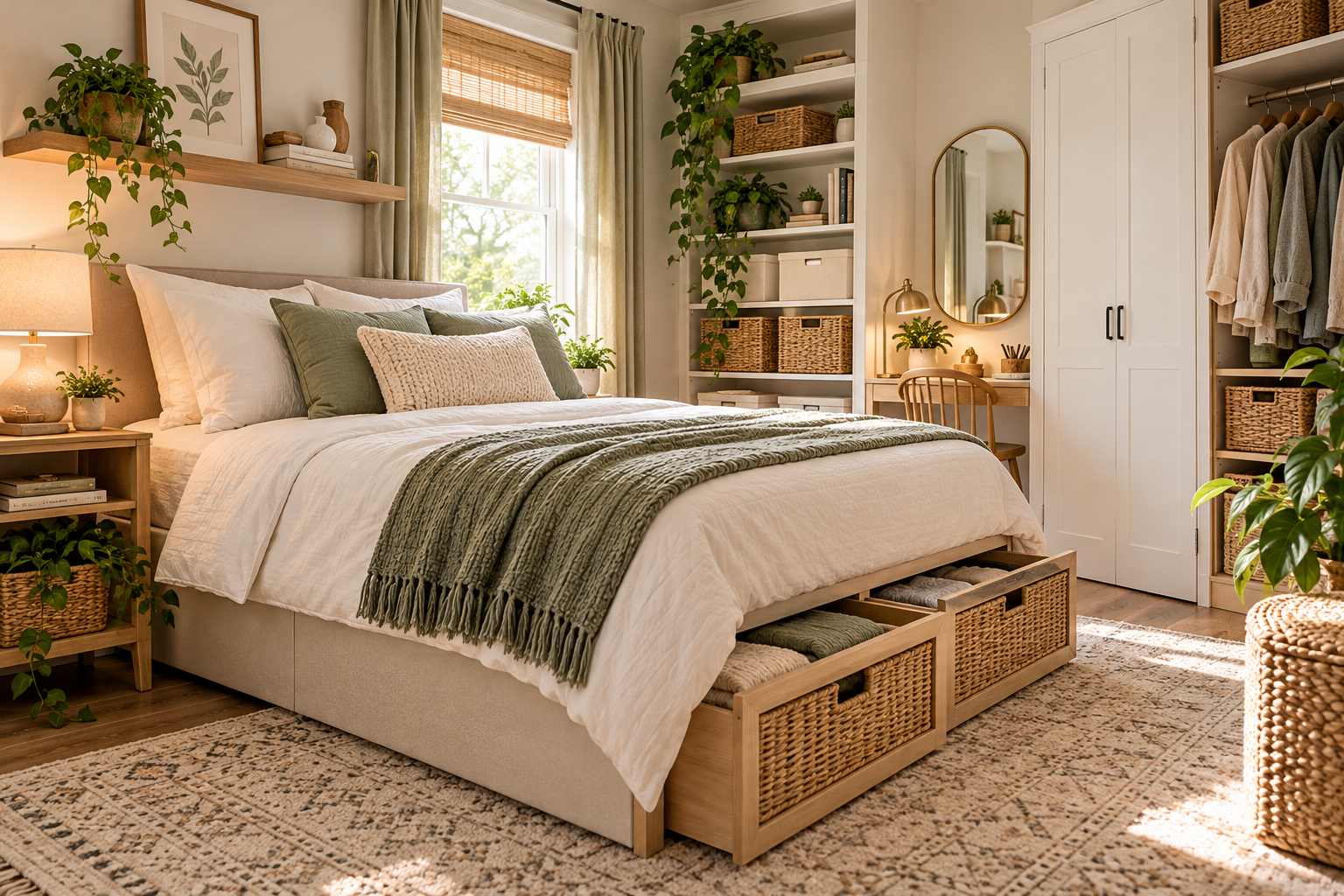
This guide to small bedroom storage ideas walks through realistic solutions for beds, closets, walls, doors, corners, clothing, accessories, and everyday clutter. If you are also working on your wardrobe, explore our closet organization ideas or our guide to bedrooms without a built-in closet for more focused solutions. Start with one area, try the ideas that suit your budget and room layout, and build a system you can maintain. You do not need to buy everything at once or make your bedroom look like a showroom. The goal is a room that feels easier to use at the beginning and end of every day.
1. Start by Finding the Storage You Actually Need
Before buying baskets or furniture, spend ten minutes noticing what creates clutter. Are clothes collecting on a chair? Are shoes blocking the wardrobe? Do books and chargers cover the bedside table? Is clean laundry waiting for a home? Each problem needs a different solution, and identifying the real issue prevents you from buying organizers that do not help.
Make three quick groups: items you use every day, items you use occasionally, and things you no longer need. Keep daily essentials in the easiest-to-reach places. Store seasonal or occasional items higher up, under the bed, or in a labeled closet bin. Donate, recycle, repair, or relocate items that do not belong in the bedroom. Decluttering is not about owning as little as possible; it is about making the storage you have useful.
Measure before shopping. Record the width and height of the space beside your bed, the clearance beneath the bed frame, the depth of shelves, and the path you need to walk through the room. A narrow cabinet that fits on paper can still make a doorway awkward or block a drawer. Leave enough room to open doors and pull out storage without moving other furniture.
2. Make the Space Under Your Bed Work
The area beneath a bed is one of the most useful places for small bedroom storage because it uses floor space that is already occupied by furniture. First, check how much clearance your frame offers. Measure from the floor to the lowest part of the bed, then choose containers that slide easily without catching on legs or supports.
Use shallow rolling bins
Low bins with wheels are handy for spare sheets, pillowcases, off-season clothing, or extra blankets. Choose containers with lids if dust is a concern, and label the front so you can find items without pulling out every bin. Clear bins make contents visible, while fabric bins create a softer look. Whichever style you choose, keep the weight manageable enough to pull out safely.
Try drawers or a storage bed
If you are replacing a bed, consider a frame with built-in drawers or a lift-up base. Built-in drawers can make everyday storage feel organized and finished, while a lift-up bed offers a larger compartment for bulky items. Check that drawers can open fully in your room and that a lift mechanism is comfortable to use. For renters or anyone who cannot replace furniture, separate under-bed containers provide a flexible alternative.
Store the right things underneath
Good choices include spare bedding, guest towels, seasonal clothing, travel bags, and rarely used accessories. Avoid storing damp textiles, food, or items that need frequent access. Wash and dry fabric items before putting them away, and use breathable bags for textiles that need airflow. A simple rule helps: if you need something every morning, it probably belongs somewhere easier to reach.
3. Choose a Bedside Table That Adds Storage
A bulky bedside table can take up valuable floor space, but having no bedside storage at all may leave your essentials scattered. Look for a compact nightstand with a drawer, a slim cabinet, or a wall-mounted shelf. A drawer hides small objects such as charging cables, lip balm, glasses, and notebooks, while an open shelf can hold a book or a small basket.
In very narrow rooms, a floating shelf beside the bed may be enough. Mount it at a comfortable height and keep only a few things on it so it remains easy to clean. A small wall sconce or clip-on reading light can free the table surface that a lamp would occupy. If you use a phone alarm, create a dedicated charging spot rather than letting cables trail across the floor.
Keep the top surface intentionally simple: a lamp or light, a water glass, and one small personal item may be all you need. A tray can group loose objects and make the table look tidier without requiring more furniture.
4. Use Vertical Space With Shelves
When floor space is limited, look upward. Wall shelves can hold books, framed art, small baskets, folded accessories, and lightweight decor without using another section of the floor. Place frequently used items on lower shelves and reserve higher shelves for objects you rarely need. In a bedroom with a low ceiling, a few well-spaced shelves often look calmer than a wall packed from top to bottom.
Always choose fixings suitable for the wall type and the expected load. Heavy books and storage boxes need secure mounting into appropriate supports, not just decorative adhesive hooks. If drilling is not allowed, consider a freestanding narrow bookcase, tension-pole shelving designed for the intended load, or removable solutions that follow the manufacturer’s instructions.
Use baskets or small boxes to group visually busy items. Matching containers create a more cohesive look, but matching everything is not necessary. Reuse sturdy boxes you already own, cover them with paper or fabric if you want a coordinated finish, and label them clearly. Leave some shelf space empty so the room does not feel overfilled.
5. Organize a Small Closet From Top to Bottom
A small closet often has unused space above the hanging rail, on the floor, and at the back of shelves. Start by taking everything out and grouping clothing by type. Check which items need hanging, which can be folded, and which are worn only in a particular season. Return only clean, wearable clothing to the closet and make a plan for repairs, donations, or items that belong elsewhere.
Use slim, consistent hangers
Thin hangers can free up rail space compared with bulky plastic or wooden hangers. Use non-slip hangers for silky garments and sturdy hangers for coats or structured pieces. Keep similar items together so you can see what you own. Avoid packing the rail so tightly that clothes are difficult to remove; a closet is only useful when you can reach what is inside.
Add a second hanging level where it fits
If the closet has enough height, a second rail can hold shirts, skirts, or folded trousers beneath shorter garments. Do not use this arrangement for long dresses or coats that need the full height. Adjustable rails and hanging organizers can help renters make use of the existing structure without permanent changes.
Make the top shelf intentional
The highest shelf works well for luggage, seasonal accessories, spare bedding, or labeled bins. Place heavier items where you can lift them safely, and avoid storing fragile objects above your head. Keep a small step stool nearby only if there is a safe place to store it and you can use it without blocking the walkway.
Use the closet floor wisely
Place shoes in a low rack, shallow boxes, or a row of matching bins. Store only the pairs you wear regularly at the front. A small basket can catch belts, scarves, or accessories, but do not let it become a container for everything without a category. If you have a deep closet, a pull-out basket or sliding bin may make the back easier to reach.
6. Make the Back of the Door Useful
Doors are often overlooked storage surfaces. An over-door organizer can hold accessories, lightweight shoes, scarves, hair tools, or small daily items. Choose pockets sized for the objects you plan to store, and check that the organizer does not stop the door from closing or scrape the wall. Follow the weight limits and avoid placing heavy items where they could fall.
Hooks are useful for tomorrow’s outfit, a robe, a tote bag, or a frequently used jacket. Keep the number of hooks limited so the door does not become a second wardrobe. For a cleaner appearance, assign each hook a purpose and remove items that are no longer in regular rotation.
If you rent, over-door hooks can be a good no-drill option, but check the door thickness and the clearance at the top. For heavier items, use a properly installed wall hook instead of relying on a light-duty organizer.
7. Pick Furniture That Does More Than One Job
In a compact bedroom, furniture should earn its footprint. A storage ottoman can hold extra blankets and provide a seat. A bench with a lift-up lid can store bags or spare bedding. A desk with drawers can double as a dressing area, and a narrow chest can work as both clothing storage and a surface for a lamp or mirror.
Before purchasing multi-purpose furniture, test how you will use it. An ottoman that is difficult to open may become a place to pile clothes instead of a useful storage unit. A desk that is too deep can make the room feel cramped. Choose pieces that fit the available space and have a clear job rather than selecting every item because it contains a compartment.
Consider furniture with legs or a visually light frame if you want the room to feel open. Closed storage hides visual clutter, while a few open shelves can make essentials accessible. A mix of the two often works well: hide less attractive items behind doors and display only the objects you enjoy seeing.
8. Use Corners and Narrow Gaps
Awkward corners can be useful if you choose storage that fits rather than forcing a large piece into the space. A narrow bookcase can hold folded clothes, books, or baskets. A corner shelf can display a plant or provide a landing place for small items. A slim rolling cart may fit between a wardrobe and a wall, but measure the full route it needs to roll through before buying one.
Keep the walking path clear, especially around the bed and door. A storage solution is not successful if you have to sidestep it every time you enter the room. For very narrow gaps, a few hooks or one shallow shelf may work better than a floor-standing organizer.
Look at the space above a dresser, beside a wardrobe, and behind the bedroom door. These areas may be suitable for a mirror with a shelf, a wall-mounted jewelry organizer, or a compact hamper. Try one change at a time and live with it for a few days before adding more.
9. Give Clothes, Shoes, and Accessories a Home
Clothing clutter often happens when an item has no obvious destination. Create simple zones for clean clothes, worn-but-still-clean clothes, laundry, shoes, bags, and accessories. A small hamper with a lid can contain laundry without spreading across the floor. If you often wear an item again before washing it, use a designated hook or a single section of the closet instead of a chair that attracts everything.
For shoes, store everyday pairs where you can put them away quickly. A low rack, slim shoe cabinet, or labeled boxes can work depending on the number of pairs and the available space. Clean shoes before storing them, and allow damp footwear to dry fully. If the room is small, keep special-occasion shoes higher up and rotate them when needed.
Accessories are easier to manage when each category has a small container. Use drawer dividers for socks and undergarments, hooks for bags, a tray for watches, and a hanging organizer for scarves. You do not need an elaborate system. The best system is the one you can reset in a minute or two.
10. Keep Small Items From Taking Over
Chargers, cosmetics, notebooks, medication, receipts, hair accessories, and other small objects can make a room look messy even when larger items are organized. Start by grouping similar objects and giving each group a defined container. Drawer dividers keep small items from sliding together, while a lidded box can store keepsakes or supplies that you do not use daily.
Use a small tray on the dresser for the items you reach for each morning. Keep only current products there and store backups elsewhere. If you have a large collection of products, rotate them or use a simple first-in, first-out arrangement so older items are not forgotten at the back.
For electronics, gather cables with reusable ties and keep chargers near the outlet where they are used. Avoid running cords under rugs or across walkways. A small cable box can hide a power strip, provided it is designed for that purpose and has adequate ventilation.
11. Create Storage Without Making the Room Look Busy
Practical storage can still look attractive. Use a limited color palette, repeat a few materials, and avoid displaying every container. Cream, natural wood, woven textures, and sage green can create a calm bedroom, but choose colors that work with what you already own rather than replacing everything to follow a trend.
Matching bins can make open shelves look orderly. Opaque containers are useful for items that are visually distracting, while clear containers help you identify contents quickly. If you use labels, make them readable and consistent. You can also place a small list inside a closet door showing which box holds seasonal accessories or spare linens.
Leave some negative space on shelves and surfaces. Empty space is not wasted storage; it makes the room easier to use and clean. If every surface is covered, consider removing a few decorative objects or moving infrequently used items to a better location instead of adding another organizer.
12. Make a Small Bedroom Feel Larger
Storage and visual space work together. Keep large furniture proportional to the room, avoid blocking windows, and use curtains that allow daylight in. A mirror can reflect light and make the room feel more open, but position it where it is useful and secure it properly. Light colors may brighten a room, though you do not need an all-white palette to make a small space comfortable.
Choose furniture with a smaller visual footprint: slim legs, simple fronts, and clean lines can help the floor remain visible. Where possible, mount lighting on the wall or ceiling to free bedside surfaces. Keep the area around the bed uncluttered and avoid filling every corner just because it is empty.
Use vertical storage selectively. A tall wardrobe can hold more than a short, wide unit with a similar footprint, but a wall of tall furniture may feel imposing if it is too deep or dark. Balance closed storage with a little open space and keep frequently used items within easy reach.
13. Affordable DIY Storage Ideas
You can improve storage without buying a complete furniture set. Reuse sturdy shoeboxes as drawer dividers, place small baskets on shelves, add adhesive cable clips where appropriate, or use a simple hook rail for bags and robes. A clean cardboard box can hold seasonal accessories inside a closet, and a fabric cover can make it look more finished. Make sure reused containers are clean, dry, and strong enough for their contents.
Repurpose a small bookcase as folded-clothing storage or use a narrow cart for items that need to move between the bedroom and bathroom. A tray can turn a cluttered dresser corner into a defined getting-ready station. If you are handy, a simple wall shelf can add useful space, provided it is securely attached with the right fixings.
Prioritize low-cost changes that solve a real problem. Measure and shop your home first: an unused basket, spare drawer divider, or container in another room may be all you need. Avoid buying a large bundle of organizers before you know the dimensions and quantities that work for you.
14. Storage Tips for Renters and Dorm Rooms
Renters and students may need solutions that are affordable, portable, and easy to remove. Freestanding shelves, under-bed bins, over-door hooks, and furniture that can move to a new room are useful starting points. Before attaching anything to a wall, review your lease and the product instructions. Adhesive hooks can fail on dusty, textured, or damp surfaces, so do not use them for heavy or fragile objects.
In a shared room, divide storage by person and category. Use separate baskets or drawer sections so belongings do not mix. Keep shared surfaces limited to agreed essentials and avoid using another person’s space as overflow. A small laundry bag and a dedicated place for bags can prevent clutter from spreading into walkways.
For a dorm room, coordinate with the bed frame and any furniture supplied by the school. Some beds can be raised only with approved risers or a particular mechanism, and some residence halls restrict certain items. Check safety rules before changing the bed height or installing large shelves. Portable storage is usually easier to adjust as your needs change.
15. Make the Closet Work When There Is No Built-In Closet
A bedroom without a closet can still have organized clothing storage. A freestanding wardrobe offers doors that hide clothes, while an open clothing rack makes garments easy to see and can fit in a narrow corner. Choose a rack with a stable base and enough capacity for the weight of your clothes. If it has a lower shelf, use it for shoes or a basket rather than allowing items to collect on the floor.
Pair a clothing rack with a small chest of drawers or fabric storage boxes for folded items. Use matching hangers to create a tidy look and leave a little space between garments. A curtain on a properly installed track can conceal a rack or shelving area, but make sure it does not block a heater, window, or doorway.
For bags and accessories, add a hook rail or a small hanging organizer. Store seasonal clothing in lidded bins under the bed or on a high shelf. A full-length mirror mounted securely to the wall or attached to a wardrobe door can be useful without taking up floor space.
16. Build a Simple Daily Reset Routine
Even the best storage system needs a little maintenance. A five-minute reset at the end of the day can stop clutter from building up. Put worn clothes in the hamper or on the designated rewear hook, return shoes to their rack, clear the bedside table, and place small items back in their containers. You do not have to deep-clean the room every evening; just return the essentials to their homes.
Once a week, check the surfaces that tend to collect clutter. Empty the laundry basket if it is full, remove cups or dishes, recycle paper, and return objects that belong in other rooms. If one area repeatedly becomes messy, the storage may be inconvenient or too far away. Move the container closer or simplify the routine rather than blaming yourself for not maintaining an awkward system.
Every season, review clothing, bedding, and accessories. Put away items that are not in use, check labels on storage bins, and donate things you no longer need. Seasonal resets are also a good time to vacuum beneath the bed and clean the closet floor.
17. Common Small Bedroom Storage Mistakes to Avoid
- Buying organizers before measuring: Check dimensions, drawer clearance, door swing, and walking space before ordering.
- Using every empty surface: A little open space makes cleaning and daily routines easier.
- Keeping everything within arm’s reach: Store occasional items higher or farther away and reserve easy-access areas for daily essentials.
- Choosing storage that is hard to use: If a lid is awkward or a bin is too heavy, you may stop putting things away.
- Overloading shelves or hooks: Follow weight limits and use appropriate hardware for your walls and furniture.
- Hiding clutter without sorting it: Containers work best when each has a clear purpose and contents you still use.
- Ignoring the walkway: Keep a comfortable path from the door to the bed and wardrobe.
- Forgetting ventilation: Store only dry textiles and shoes, and avoid trapping damp items in sealed containers.
18. A Weekend Plan to Organize Your Small Bedroom
You can make meaningful progress in one weekend without emptying the entire room at once. On the first morning, choose one zone: the bedside table, under-bed area, or closet floor. Remove the contents, sort them into keep, relocate, donate, and discard groups, then clean the space before putting back only what belongs there.
Next, measure the storage gaps you want to improve. Write down the dimensions and decide what each new container or furniture piece needs to hold. If you already have suitable bins, test them before buying replacements. Set up the easiest, highest-impact change first, such as under-bed storage for spare bedding or a hook for the bag that always lands on the floor.
On the second day, organize one more zone and establish a short daily reset. Avoid starting several large projects at once. Once you have lived with the new arrangement for a week, notice what works and adjust what does not. A practical bedroom develops through small improvements, not one perfect shopping trip.
Frequently Asked Questions
What is the best storage for a very small bedroom?
The best option depends on what you need to store and the room’s layout. Under-bed containers, wall shelves, slim bedside storage, over-door hooks, and furniture with drawers are often useful because they use space that would otherwise be overlooked. Measure first and choose only the solutions that solve your specific clutter problems.
How can I add storage without buying new furniture?
Start by decluttering, rearranging the closet, using boxes as drawer dividers, adding lightweight hooks where safe, and moving seasonal items into existing bins or luggage. Use the backs of doors and the space beneath the bed. Reorganizing what you already own can reveal more usable space than buying a new organizer.
How do I keep a small bedroom from looking cluttered?
Give everyday items a clear home, keep open surfaces simple, group small objects in trays or baskets, and avoid filling every shelf. Closed storage can hide visually busy items, while a consistent palette and a few repeated materials help the room feel cohesive. Most importantly, make the storage easy to use so tidying takes very little time.
Are storage beds worth it?
A storage bed can be a good investment if you need space for bedding, seasonal clothing, or bulky items and can access the drawers or lift mechanism comfortably. Check the dimensions and the clearance around the bed before buying. If you already own a suitable bed, low bins may provide similar benefits for less money.
What should I avoid storing under the bed?
Avoid storing damp clothing, food, or items that need frequent access. Keep textiles clean and dry, use containers suited to the items, and check the area periodically for dust. Heavy bins should be easy enough to move without straining, and the bed’s structure should remain accessible for cleaning or maintenance.
Final Thoughts
The most effective small bedroom storage plan starts with your real habits and the space you already have. Use the area under the bed, make the closet easier to navigate, add a few useful vertical solutions, and choose furniture that serves more than one purpose. Keep daily essentials accessible and move occasional items out of the way. You can create a calmer, more functional bedroom gradually, one small zone at a time.
Begin with the spot that frustrates you most, measure before buying anything, and give every item a simple home. When storage matches your routine, keeping a small bedroom tidy becomes easier and the room can feel more spacious without needing more square footage.