
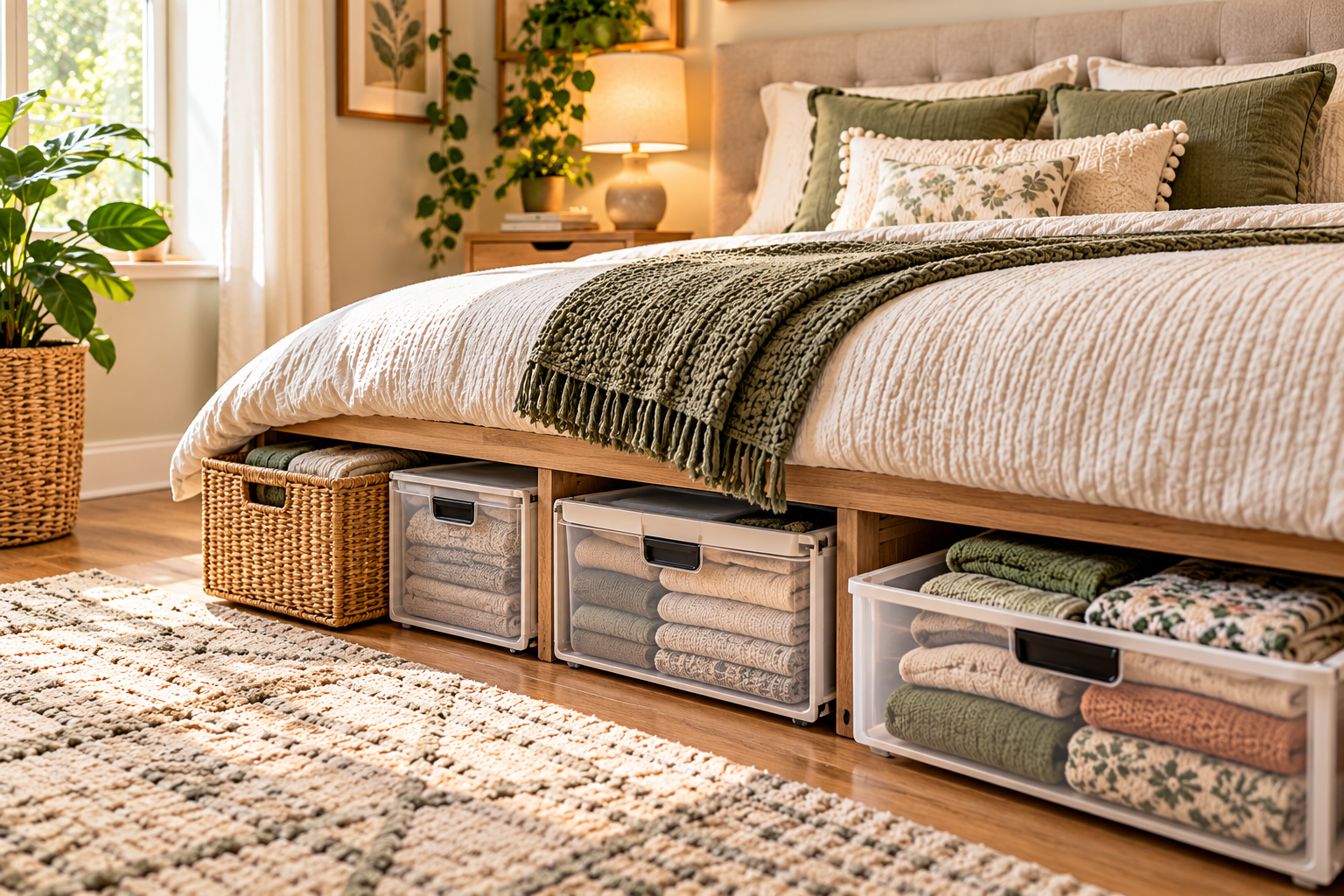
Under-Bed Storage Ideas
Under-Bed Storage Ideas for Small Bedrooms When a small bedroom has almost no spare floor space, the area beneath the bed can become one of its most useful storage zones. The trick is choosing containers and systems that fit the available clearance, protect what you store, and slide out without turning a simple task into a furniture-moving workout.
These 12 under-bed storage ideas focus on practical setups for real homes, from built-in drawers to low-profile bins and seasonal clothing storage. Before buying anything, measure the floor-to-bed clearance, the width and length of the usable space, and the route you need to pull items out. A tidy system should make your room easier to use, not create a hidden pile you dread opening.
Quick Navigation
- Measure before you buy
- 1. Use low rolling storage bins
- 2. Choose a bed with built-in drawers
- 3. Store soft items in zippered fabric bags
- 4. Pick clear lidded containers
- 5. Compress bulky seasonal bedding carefully
- 6. Add a flat shoe organizer
- 7. Divide drawers into smaller zones
- 8. Put a shallow drawer on casters
- 9. Match under-bed storage to bedside routines
- 10. Rotate seasonal clothing
- 11. Store luggage inside luggage
- 12. Protect items from dust and moisture
- Mistakes to avoid
- Frequently asked questions
Measure Before You Buy
Start with the bed, not the storage product. Measure the smallest clearance between the floor and the bed frame, including any crossbars, support legs, or center rails. Then measure the usable width and depth. Leave a little extra room so the container does not scrape the frame or get wedged beneath it.
Also check how the bed opens into the room. A long bin may technically fit under the mattress but be impossible to pull out if it hits a dresser or bedroom door. If the bed sits close to a wall, choose storage that can be accessed from the open side. For a bed with a center support, you may need two narrower containers instead of one wide one.
Make a quick inventory before shopping. Bedding, spare towels, off-season clothes, shoes, and rarely used accessories can all work well under a bed. Items you reach for every morning are usually better kept in a drawer or closet at a comfortable height. Under-bed storage is most useful for things you need sometimes, not constantly.
1. Use Low Rolling Storage Bins
Low rolling bins are one of the most flexible options for a small bedroom. Their wheels make it easier to reach items at the back, especially if the bed is heavy or the storage area is deep. Look for a low profile, smooth wheels, and a lid that stays securely in place.
Use one bin for spare sheets and pillowcases, another for seasonal clothing, and a third for accessories or shoes if space allows. Keep categories separate so you do not have to unload everything to find one item. If your bed has support rails, measure between them before choosing a wide bin.
Works best for: renters, platform beds with open clearance, and people who want to rearrange their storage later.
2. Choose a Bed with Built-In Drawers
If you are furnishing a bedroom from scratch, a storage bed can make the room feel calmer by replacing a separate chest or plastic containers. Side drawers are convenient for folded clothes, spare linens, and pajamas. Some designs have drawers on one side only, which can be helpful when the bed is against a wall.
Check drawer depth, opening direction, and the clearance needed to pull them out fully. A drawer that cannot open because it hits a nightstand will quickly become dead space. For a compact room, compare the total footprint of a storage bed with your current bed plus any dresser it could replace.
Built-in storage is a bigger purchase than a bin, so think about how long you expect to keep the bed and whether the drawer hardware feels sturdy. Choose a finish that works with your existing furniture instead of introducing a bulky visual contrast.
Works best for: homeowners or anyone choosing a new bed and needing substantial everyday storage.
3. Store Soft Items in Zippered Fabric Bags
Fabric under-bed bags are lightweight, flexible, and easy to lift. They work well for sweaters, spare pillowcases, lightweight blankets, and other soft items that do not need a rigid container. Handles make them easier to pull out, while a zip closure helps keep dust off stored textiles.
Choose a bag with a reinforced base if you plan to slide it across the floor often. Avoid overfilling it: a bulging bag may snag on the frame or put pressure on the zipper. Add a label on the short end so you can identify the contents without dragging every bag into the light.
Fabric bags are less protective than hard-sided containers, so avoid using them for fragile objects or anything that must stay perfectly dry. Make sure stored clothing is clean and completely dry before packing it away.
4. Pick Clear Lidded Containers
Clear containers make it easy to see what is inside without opening each lid. This is especially helpful when you store several categories beneath the bed. Choose low, stackable boxes with smooth edges and lids that close properly. A lid can reduce dust, but it should not be treated as a guarantee against moisture.
Group similar items together and keep the heaviest container closest to the open side so it is easier to retrieve. If the storage space is divided by bed legs or support bars, use several smaller boxes rather than forcing one large box into an awkward position.
For a calmer look, use matching containers and simple labels. The storage itself may be hidden, but a consistent system makes seasonal changes and laundry days less frustrating.
5. Compress Bulky Seasonal Bedding Carefully
Vacuum storage bags can reduce the volume of bulky comforters, spare duvets, and some seasonal textiles. They are useful when closet shelves are full, but check the care instructions for each item before compressing it. Some delicate, feather-filled, or structured bedding may not respond well to prolonged compression.
Never pack bedding away while it is damp. Let items air fully, follow the manufacturer’s washing and storage directions, and inspect them when you bring them back into use. Store compressed bags inside a protective container or on a clean surface beneath the bed, away from possible spills.
Compression works best for things you do not need weekly. If you regularly change bedding, keep one spare set in an easy-to-reach drawer instead of sealing it away in a vacuum bag.
6. Add a Flat Shoe Organizer
A low shoe organizer can keep pairs together and stop shoes from spreading across the closet floor. Choose a model designed for under-bed clearance, with a cover or compartments that suit the shoes you own. Flat slippers, sandals, and casual shoes are often easier to store this way than tall boots.
Clean and dry shoes before storing them. Avoid placing damp footwear in a closed organizer, because trapped moisture can cause odors and damage materials. If your shoes are used daily, store them near the entrance or in an accessible shoe rack instead of making yourself pull out a container every morning.
Use a single organizer for a defined category, such as warm-weather shoes or special-occasion pairs. This prevents under-bed storage from becoming a second, unstructured closet.
7. Divide Drawers into Smaller Zones
Large under-bed drawers can turn into catch-all compartments unless you divide the space. Small bins, fabric dividers, or simple labeled pouches can separate socks, belts, workout accessories, spare linens, and other small items. Use dividers that can be lifted out easily when you need to clean the drawer.
Give each section a clear purpose and avoid filling every inch. A little empty space makes it easier to put things away without crushing or tangling them. If you find yourself creating too many tiny categories, simplify the system rather than adding more organizers.
For children’s rooms or shared bedrooms, use broad labels such as “extra bedding,” “winter accessories,” or “sportswear.” Easy labels help everyone return things to the right place.
8. Put a Shallow Drawer on Casters
A shallow drawer on casters can be a useful DIY option if your bed has open space but no built-in storage. Choose a sturdy, low-sided drawer or purpose-built under-bed unit and wheels that roll smoothly on your floor type. Check that the wheels and drawer together remain below the bed frame.
Before loading it, test the unit empty and make sure it does not catch on rug edges, cables, or bed supports. Attach handles or use a design with a safe grip so you can pull it out without yanking on the contents. If you are modifying furniture, make sure the drawer remains stable and cannot tip when extended.
Do not attach improvised storage to a bed frame in a way that compromises its strength or creates sharp edges. If a DIY project feels unstable, a ready-made low-profile container is the safer choice.
9. Match Under-Bed Storage to Bedside Routines
Think about what belongs near the bed but does not need to sit on the nightstand. Extra pillowcases, a spare blanket, a book you are currently reading, or a heating pad stored according to its instructions might fit in an accessible drawer. Keep electrical devices and anything that generates heat away from enclosed storage unless the manufacturer specifically permits it.
Use one easy-to-reach compartment for bedtime items and reserve the harder-to-access area for seasonal belongings. This keeps the daily routine simple while making use of the entire space. Avoid storing loose items directly on the floor where they collect dust and are difficult to retrieve.
10. Rotate Seasonal Clothing
Under-bed storage is ideal for clothing that is out of season. When warmer weather arrives, clean and fully dry bulky sweaters, thermal layers, or winter accessories before packing them away. In cooler months, rotate lightweight summer clothing into the storage zone and bring the current season’s items back into the closet.
Use breathable fabric bags for suitable textiles or lidded containers where dust protection matters. Label the container with both the season and the category, such as “winter knitwear” or “summer sleepwear.” This is more useful than a vague label like “clothes.”
Before storing anything, remove pieces you no longer wear. Storage should preserve useful belongings, not simply hide decisions you have been postponing. If a container stays unopened for several seasons, review whether its contents still deserve the space.
11. Store Luggage Inside Luggage
If your suitcases fit beneath the bed, use them as storage containers for travel accessories, packing cubes, spare toiletry bags, or other lightweight items. Smaller suitcases can sometimes nest inside larger ones, leaving one compact footprint. Keep toiletries empty and dry, and do not store liquids that could leak.
Protect luggage from dust with a cover or clean storage bag. Leave enough room to slide it out without scraping the bed frame, and do not overfill it until it becomes too heavy to move comfortably. If you travel frequently, keep a small travel kit accessible and store the rarely used extras deeper under the bed.
12. Protect Items from Dust and Moisture
Even a tidy under-bed system needs occasional maintenance. Dust can collect beneath furniture, and some rooms may have humidity or condensation issues. Use lidded containers or zippered covers for suitable belongings, vacuum the area periodically, and inspect stored textiles when you rotate them.
Only store clean, completely dry items. If you notice a musty smell, condensation, or signs of dampness, remove the contents and address the moisture source before storing anything there again. Do not assume a plastic lid makes a damp room safe for long-term storage.
Leave airflow around the bed where practical, especially in humid conditions. If your room is prone to moisture, choose storage that can be inspected and cleaned easily, and avoid putting irreplaceable items directly on the floor.
Common Under-Bed Storage Mistakes to Avoid
- Buying before measuring: a container that is too tall or too wide wastes money and can scratch the frame.
- Storing damp textiles: always clean and dry bedding and clothes thoroughly before packing.
- Using the area as a junk drawer: keep categories clear and review contents seasonally.
- Blocking access: make sure drawers can open without hitting a dresser, rug, or door.
- Putting daily essentials too far away: store frequently used items in easy-to-reach drawers or shelves.
- Overloading bins: heavy containers are difficult to pull out and can strain handles or wheels.
- Ignoring the floor: clean underneath the bed before placing storage back in position.
How to Set Up Your Under-Bed Storage in One Afternoon
- Empty the space. Remove everything beneath the bed and clean the floor.
- Sort into categories. Separate bedding, clothing, shoes, luggage, and miscellaneous items.
- Choose what deserves storage. Donate or recycle items you no longer use where possible.
- Measure the opening. Note the lowest clearance, usable depth, width, and any obstructions.
- Choose matching containers. Use rolling bins, bags, drawers, or a combination suited to the items.
- Label each container. Make the label specific enough to find things quickly.
- Place occasional-use items farther back. Keep seasonal and rarely used items away from the easiest access point.
- Set a review reminder. Recheck the system when the season changes or when you rotate bedding.
For more ideas across the room, browse our Small Bedroom Storage category and our guide to small bedroom storage ideas. Combining under-bed storage with vertical shelves and a deliberate decluttering routine helps the whole room work harder without feeling crowded.
Frequently Asked Questions
What should I store under my bed?
Good options include spare bedding, seasonal clothing, shoes you do not wear daily, luggage, and accessories you use occasionally. Store only clean, dry items, and keep anything that needs regular access somewhere easier to reach.
Are plastic containers or fabric bags better?
It depends on what you store. Lidded plastic containers are sturdy and easy to wipe clean, while fabric bags are lightweight and flexible for soft textiles. Both should be used only with dry contents, and neither should be assumed to solve a dampness problem.
How do I stop under-bed storage from collecting dust?
Choose lidded bins or zippered covers, clean underneath the bed regularly, and avoid leaving clothes loose on the floor. Containers with smooth surfaces are usually easier to wipe down.
Can I store bedding in vacuum bags long term?
Follow the bedding and bag manufacturers’ care instructions. Vacuum bags can save space for some bulky textiles, but not every filling or fabric is suited to prolonged compression. Always pack items clean and fully dry.
How often should I clean under the bed?
A practical starting point is to inspect and clean the area every month or two, then do a fuller review when changing seasonal clothing or bedding. Adjust the schedule for pets, allergies, dust levels, and room conditions.
What if my bed is too low for storage bins?
Measure first and do not force a container into the gap. Slim fabric bags may fit where rigid bins do not. If there is almost no clearance, consider bed risers only if they are compatible with the bed and floor and can support the load safely, or use vertical wall storage instead.
Final Thoughts
The best under-bed storage is the kind that disappears from view but remains easy to use. Start with accurate measurements, store only items that belong in this zone, and choose containers that match your bed and your routine. A few well-labeled drawers or bins can free up closet space, clear the floor, and make a small bedroom feel more settled without adding another bulky piece of furniture.